Dry Ice for Farming
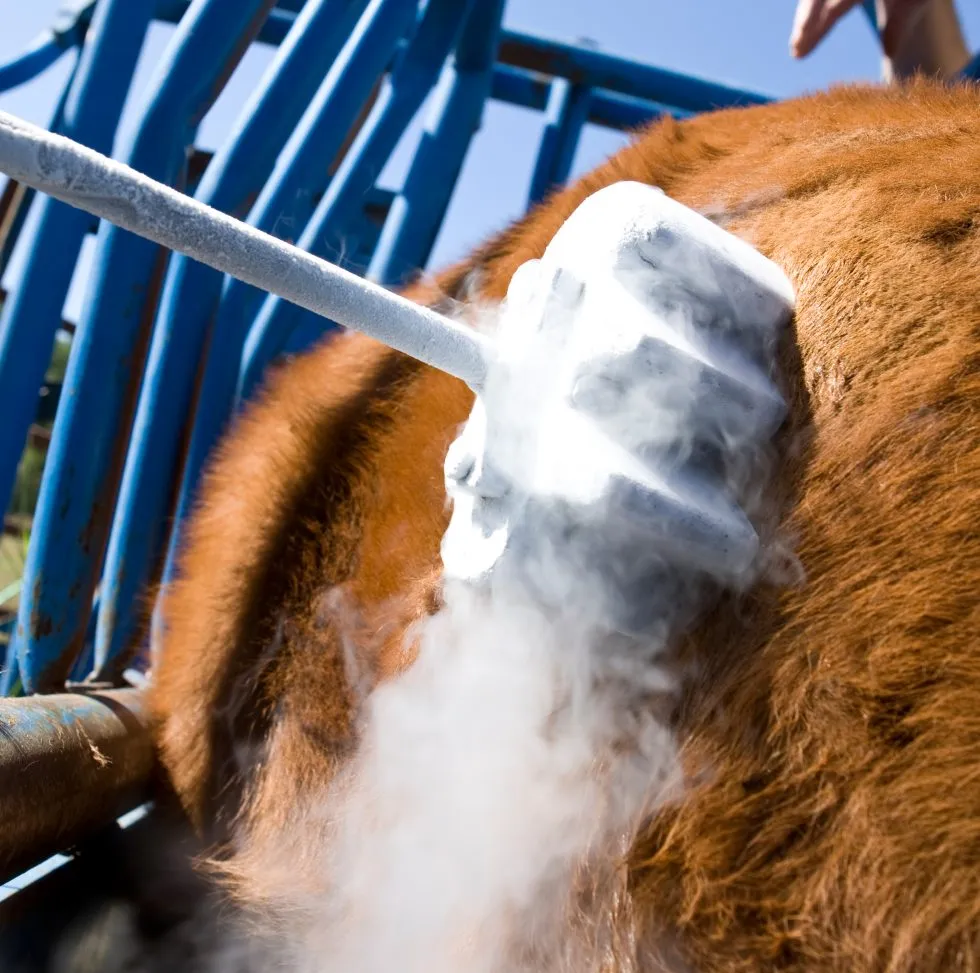
Dry ice branding, also known as freeze branding, is a permanent livestock identification method that uses extreme cold to destroy hair pigment cells. This process causes hair to grow back white, creating a high-contrast, legible mark that is widely considered more humane and less painful than traditional hot-iron branding.
Freeze branding can be a relatively painless and very effective form of permanent animal and herd identification. Research indicates that freeze branding is more comfortable to cattle than is hot iron branding. While hot iron branding makes a neat, legible scar on the surface of the hide, freeze branding changes hair color to white. Freeze branding works by destroying the pigment-producing cells in hair follicles, resulting in white hair growth. Freeze brands typically become readable about 6 to 8 weeks after branding. Spring or autumn is a recommended time to freeze brand, as a new hair coat is starting. Freeze branding can be successful during any time of the year, but brands applied after a new hair coat is already on an animal may take up to 4 months to appear as white hair.
In wine farming and viticulture, controlling temperature and oxidation is essential to preserving grape quality and flavor. Dry ice provides an effective, residue-free cooling solution that supports critical stages of grape harvesting, processing, and storage.
Dry ice is commonly used during harvest and transport to rapidly cool freshly picked grapes, slowing down fermentation and preventing premature oxidation. This helps maintain natural aromas, color stability, and sugar balance—especially important in warm climates or during long transport from vineyard to winery.
In the winery, dry ice is used to protect must and grapes from oxygen exposure during crushing and destemming. By displacing oxygen with CO₂, dry ice helps preserve delicate varietal characteristics and improves overall wine quality without introducing moisture or chemicals.
Dry ice is also valuable for temperature control during cold soaking, equipment cooling, and short-term storage. Because it sublimates directly from solid to gas, it leaves no water residue, ensuring a clean and controlled winemaking environment.